


A Sovereign Homesteader’s Guide to Emergency Food Storage

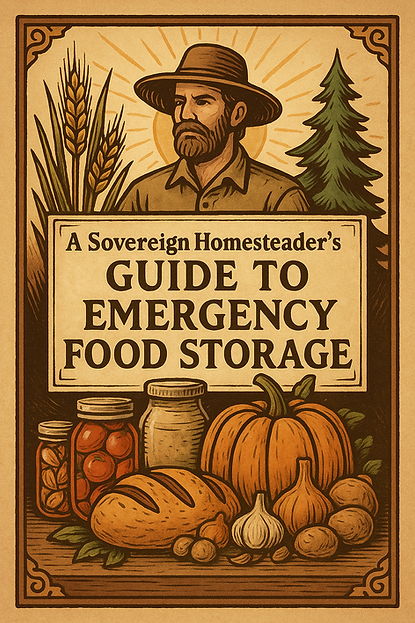
Life is unpredictable. Power failures, supply chain shocks, natural disasters, or economic disruption can strike without warning. But cultivating resilience is not about fear—it’s about sovereignty. At #YES2U, we believe your home, your soil, and your pantry together form your first line of defense. Let this be your guide to building a food stock system that holds energy, health, and dignity, not just calories.
1. What Not to Do: Mistakes That Break Trust with Your Pantry
Before stocking up, you need clear boundaries. A pantry built on waste or impulse is a burden, not a fortress.
a. Bulk without a plan
One 5-gallon bucket of peanut butter might seem efficient—but if you can’t finish it before it spoils, you’ve essentially baked loss into your system. Instead, aim for multiple smaller sealed jars you rotate more easily.
b. Storing foods you don’t cook
Beans you can’t prepare, exotic grains you never learned, freeze-dried meals you haven’t tested—these are traps. Only stock foods you already love and know how to use. Sovereignty begins with familiar nourishment.
c. Over-investing in MREs or “prepper” kits
Yes, they have a place. But they shouldn’t be your foundation. MREs are expensive, sometimes bland, and often unsuited to your local palate or water constraints. Use them as emergency backups, not your main menu.

2. The Triad of Emergency Reserves: Energy, Nutrition, Water
A sovereign stockpile must balance three pillars:
Energy: Starches, fats, grains
Nutrition: Minerals, vitamins, fiber
Water: The nonnegotiable resource
Nonperishables you can trust
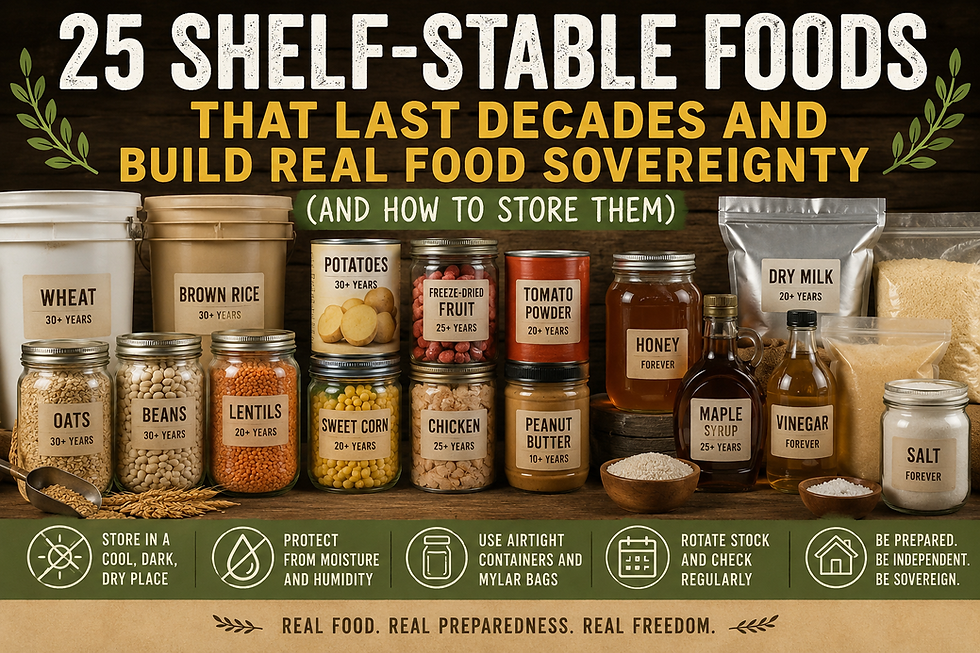
Include staples like rice, dried beans, oats, nuts, canned beans/vegetables, nut butters, dried fruit, salt, oil, vinegar. Each item should shift seamlessly between everyday use and backup reserve.
What not to dedicate shelf space to
Don’t waste room on bread, milk, fresh cheese, boxed cereals, items that spoil fast, or foods you don’t already eat.
Garden + livestock synergy
Your preserved reserve is supplemented by what grows in your soil. Even in emergency times, your garden, fruit trees, poultry, or rabbits can fill in gaps — reducing strain on your jarred stores.
3. How to Store It Well
Organize for clarity
Keep a dated inventory list in the pantry. Mark “first in, first out” (FIFO). Use labels that can’t fade or smear.
Storage methods & preservation techniques
Canning (water bath / pressure canning)
Dehydration & drying
Fermentation & lacto-fermenting
Vacuum sealing / Mylar + oxygen absorbers
Cold or root-cellar storage
Smoking & salting, for meats
Each method has a place. Use whichever suits your climate, tools, and climate rhythms. For instance, in summer’s heat, fermentation may break faster — adjust your methods seasonally.

4. Ideal Storage Locations
Where you store your food matters almost as much as what you store.
Location tips:
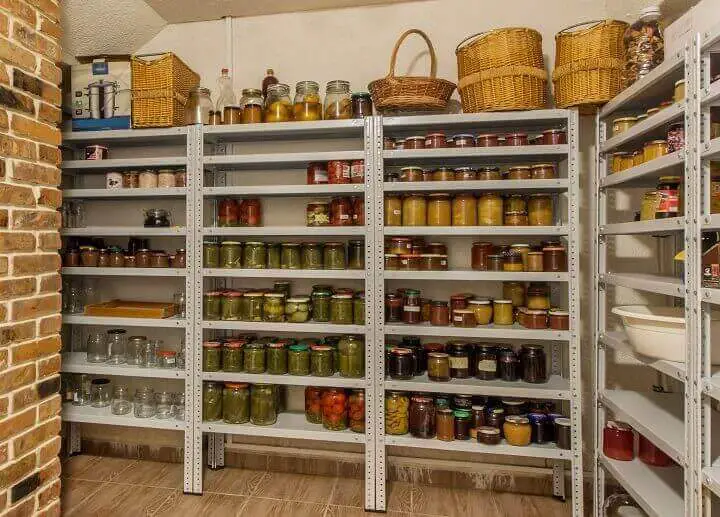
Cool, dry, stable-temperature spaces
Off the ground (to reduce pests)
Away from direct sunlight
Separated by category (grains, legumes, preserves, seeds)
In containers above waist height—so critters can’t reach
Air quality: If your area tends to be damp, consider desiccants or silica packs. Watch for mold risks on jars or lids.
Temperature: Aim for 32°F–60°F if possible. If your pantry dips to 70°F–75°F, tighten seals and shorten rotation intervals.
5. Practical Food Storage Tips
Add a bit each week. You don’t need to buy a year’s worth in one go. Slowly build momentum.
Test new foods. Buy small samples, cook them, rotate or discard if they don’t land well.
Layer your security. Use multiple seals—Mylar inside jars, then oxygen absorbers, then sealed bins.
Watch your stock. Schedule check-ins every six months. Smell, inspect, test a small amount.
Don’t skip water. You should not store food without an adequate water supply.
Get the whole family involved. Shared responsibility keeps the system alive.
6. Nutrition, Water & Long-Term Strategy
Freeze-dried & dehydrated foods are powerful, but they demand water. If your grid fails and water stops flowing, these become liabilities. Thus, they should complement, not replace, your base reserves.
Craft a multi-layer system:
Layer 1: Extra of foods you already consume
Layer 2: Electricity-free staples (canned goods, grains cooked on wood or solar)
Layer 3: Long-term freeze-dried / emergency options
Also maintain a 72-hour grab bag — some portable sustenance you can carry if relocation becomes necessary.
7. Where to Place Your Stock
Good food storage requires strategic geography.
Suggested zones:
Basements, root cellars, cool closets
Between walls or behind protective panels
Elevated shelving
In covered drums or sealed crates
Avoid placing cans on floors or in direct contact with soil—moisture and rodents are constant threats.
8. #YES2U Integration: Sovereignty & Sustainability in Every Shelf
Circular Pantry Concept: Compost peels & inedible bits, feed soil, grow more, harvest, preserve—feed back into your system.
Local sourcing first: Buy from growers near you so your “emergency” stock supports local food ecosystems.
Mindful packaging: Use glass, stainless, or seed-based-degradable containers—not plastic.
Mindset over scarcity: Your stock is not hoarding—it’s resource stewardship. Oftentimes, when you can buy in bulk as a practice, your overall food bill will decrease so long as you are managing the food before it expires.
Teach & share: Train neighbors in food preservation. Resilience spreads faster than panic.
Final Thoughts
A robust emergency food store is not just about survival—it’s about anchoring sovereignty, health, and inner peace during upheaval. With consistent rotation, careful method, and sustainable philosophy, you don’t just prepare for tomorrow—you elevate how each meal reinforces your independent path.
Be steady. Be sovereign. Build your shelf rooted in soil, story, and resistance. Want to go deeper?
This post is just one glimpse into many sovereign and sustainable practices that can help you overcome hardships and reclaim your own autonomy.
In Issue 2 of #YES2U Magazine, we take the conversation beyond food storage and into the living blueprint of sustainable village life, where you can begin to:
🌱 Revitalize your land with time-tested methods that create living, self-sustaining soil
🏡 Design food, housing, and energy systems that make you less dependent on fragile supply chains
🤝 Root resilience in community—where neighbors trade knowledge, harvests, and support instead of isolation
🔥 Reimagine sustainability not as a trend, but as a cultural rebirth of intimacy with Earth itself because true regeneration isn’t just about growing vegetables—it’s about rewilding the human spirit, one garden, one household, one community at a time. ✍️ Explore More Blog Posts – Brief deep dives, wisdom drops, and soul-expanding insights for sovereign and sustainable living.
📰Read the Magazine – Revolutionary voices. Soul-rich articles. Community-powered change. Read Issue 1 for free! 🏡Start Building Your Own Ecovillage Now - Go from penniless to paradise with a free guide that reveals practical steps on how to build your slice of The Oasis!
🎙️Listen to the Podcast – Unfiltered conversations, spiritual fire, and mic-drop awakenings.
🛍️Shop Intention-Fueled Products – Handcrafted by our co-founder, find ritual goods and self-activation tools designed to awaken your essence.
👕Wear the Message – Visit the new #YES2U Merch Shop to embody the movement—literally. Statement designs, soul-coded slogans, and empowerment you can wear.
🏞️Join Our Facebook Community & Access The Homesteading Master Vault - Discover the others and one of the largest databanks on sustainability and homesteading.



Comments